Stop Building Custom Indexers: Why 90% of Startups Waste $50k+
Most startups unnecessarily build custom indexers, wasting significant time and money. A unified API can often replace these custom solutions, offering a more efficient and cost-effective alternative.


David Liu
CTO & Co-Founder
Blockchain
5 Minutes
The Allure of the Custom Indexer
Startups often find themselves needing to access and process data from various sources scattered across different databases, APIs, and file formats. The natural inclination is to build a custom indexer. The perceived benefits are:
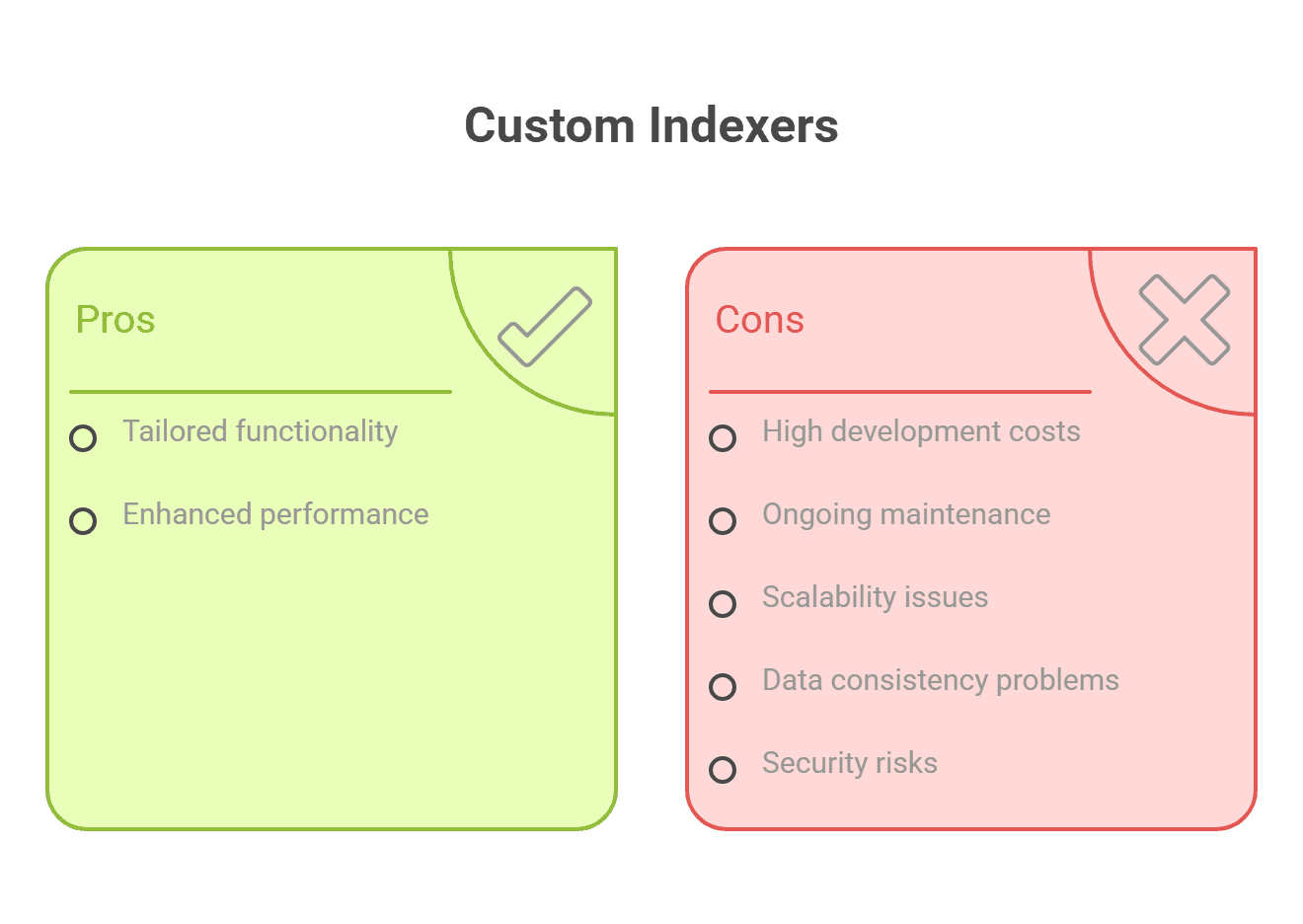
Complete Control. Building an indexer in-house gives the development team full control over the indexing process, data transformation, and query capabilities.
Tailored Performance. A custom indexer can be optimized for the specific data and query patterns of the application.
Deep Integration. A custom indexer can be tightly integrated with the existing infrastructure and codebase, potentially simplifying development and deployment.
Avoiding Vendor Lock-in. Some startups are wary of relying on third-party services and prefer to build their own solutions.
The Hidden Costs and Pitfalls
While the perceived benefits are tempting, the reality is often far more complex and costly.
Development Time and Resources. Building a robust and scalable indexer requires significant development effort, including designing the indexing schema, implementing indexing logic, handling data transformations, and building query interfaces. This can easily take several months of dedicated development time, costing upwards of $50,000 in salaries and related expenses.
Maintenance Overhead. Once built, the indexer needs continuous maintenance: fixing bugs, optimizing performance, handling schema changes, and adapting to evolving data sources.
Scalability Challenges. Scaling an indexer to handle large volumes of data and high query loads requires careful design, efficient data structures, and potentially distributed computing infrastructure.
Data Consistency Issues. Ensuring data consistency across multiple data sources and the indexer requires careful synchronization mechanisms and error handling.
Security Vulnerabilities. Custom indexers can be vulnerable to security exploits if not properly designed, exposing sensitive data to unauthorized access.
Lack of Expertise. Building a high-performance, scalable indexer requires specialized expertise in data structures, algorithms, and distributed systems, which many startups lack in-house.
Opportunity Cost. Time and resources spent on a custom indexer could be better spent on core product development and innovation.
The Unified API Alternative
A unified API provides a single interface for accessing and querying data from multiple sources. It abstracts away the complexities of underlying data sources and delivers a consistent, easy-to-use API for developers.
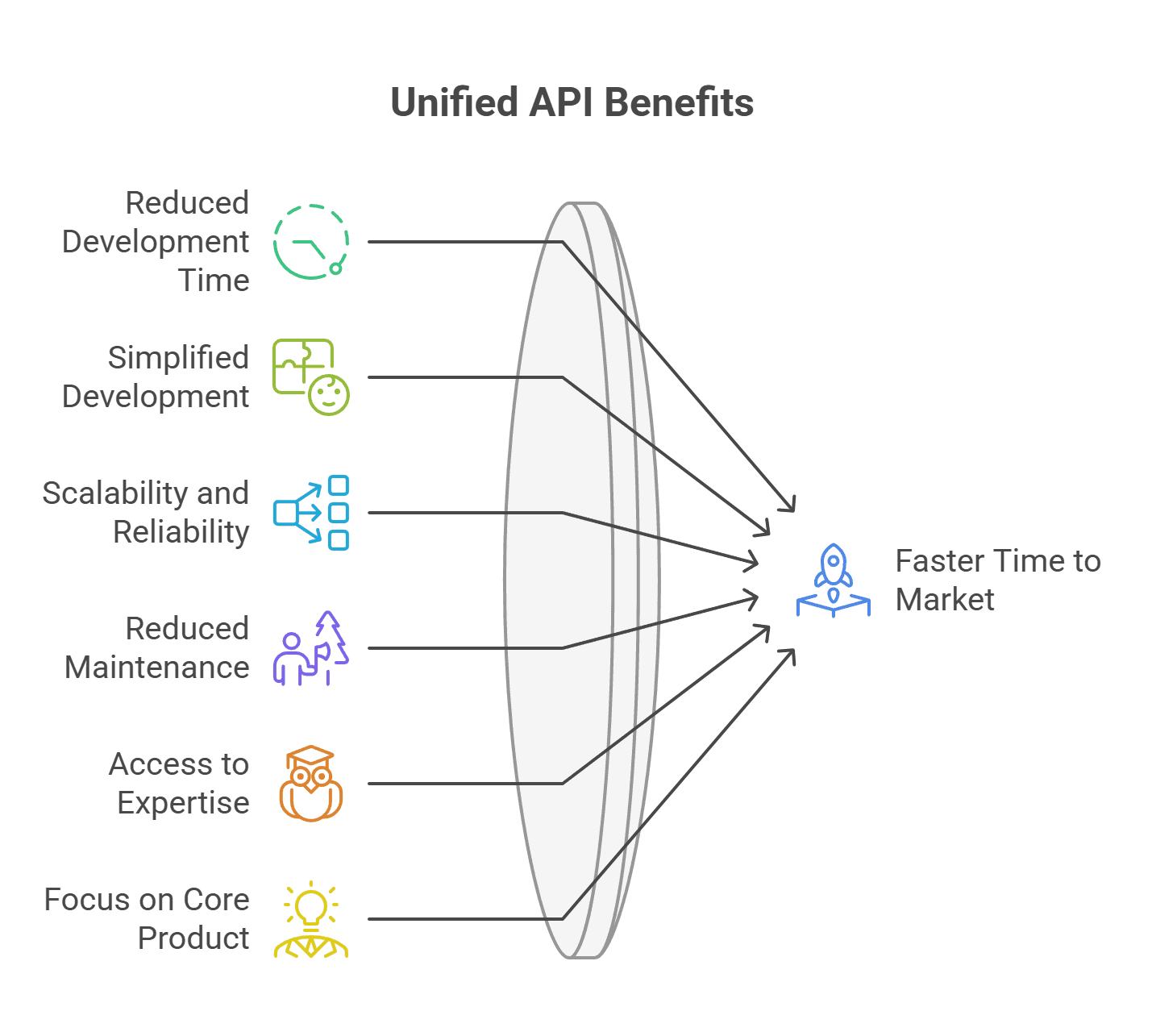
Reduced Development Time and Cost. No need to build and maintain a custom indexer, saving significant development time and resources.
Faster Time to Market. Quickly access and integrate data from multiple sources, accelerating your path to launch.
Simplified Development. A consistent, easy-to-use interface for developers means less overhead and fewer integration headaches.
Scalability and Reliability. Unified APIs are built on scalable, reliable infrastructure, ensuring high performance and availability.
Reduced Maintenance Overhead. The API provider handles maintenance and updates, freeing your team to focus on what matters.
Access to Expertise. Unified API providers bring specialized expertise in data integration and indexing, delivering quality you'd struggle to replicate in-house.
Focus on Core Product. Stop spending time on infrastructure. Use a unified API and build the product your users actually care about.
When a Custom Indexer Might Still Be Justified
There are situations where a custom indexer remains the right call.
Extremely Unique Data Requirements. If your data requirements are highly specialized and cannot be met by a generic unified API, a custom solution may be necessary.
Stringent Performance Requirements. If performance demands cannot be met by a unified API, a custom indexer might be required, though optimizing it can be complex and time-consuming.
Highly Sensitive Data. If your data cannot be entrusted to a third-party provider, a custom solution may be preferred, balanced against the security risks of building and maintaining it yourself.
Regulatory Compliance. Certain regulatory requirements may mandate a custom indexer.
Conclusion
Building a custom indexer is often a costly, time-consuming endeavor that can be avoided with a unified API. Before embarking on that journey, carefully evaluate the long-term costs and benefits. In the vast majority of cases, a unified API is the better choice, allowing your team to focus on core product development and innovation.